

School Curriculum
The World's First Global Play-Based Wellbeing Curriculum
25–40 weeks of activities, mapped to 16 global curriculum standards, Social-Emotional Learning (CASEL) and Respectful Relationships. Designed by educators, validated by La Trobe University.
Open the curriculum, the way your teachers will.
Dale & Paul walk you through a teacher's first lesson setup, the dashboard, the video tutorials, the family take-home, the standards mapping. Two minutes from opening the platform to ready-to-teach.
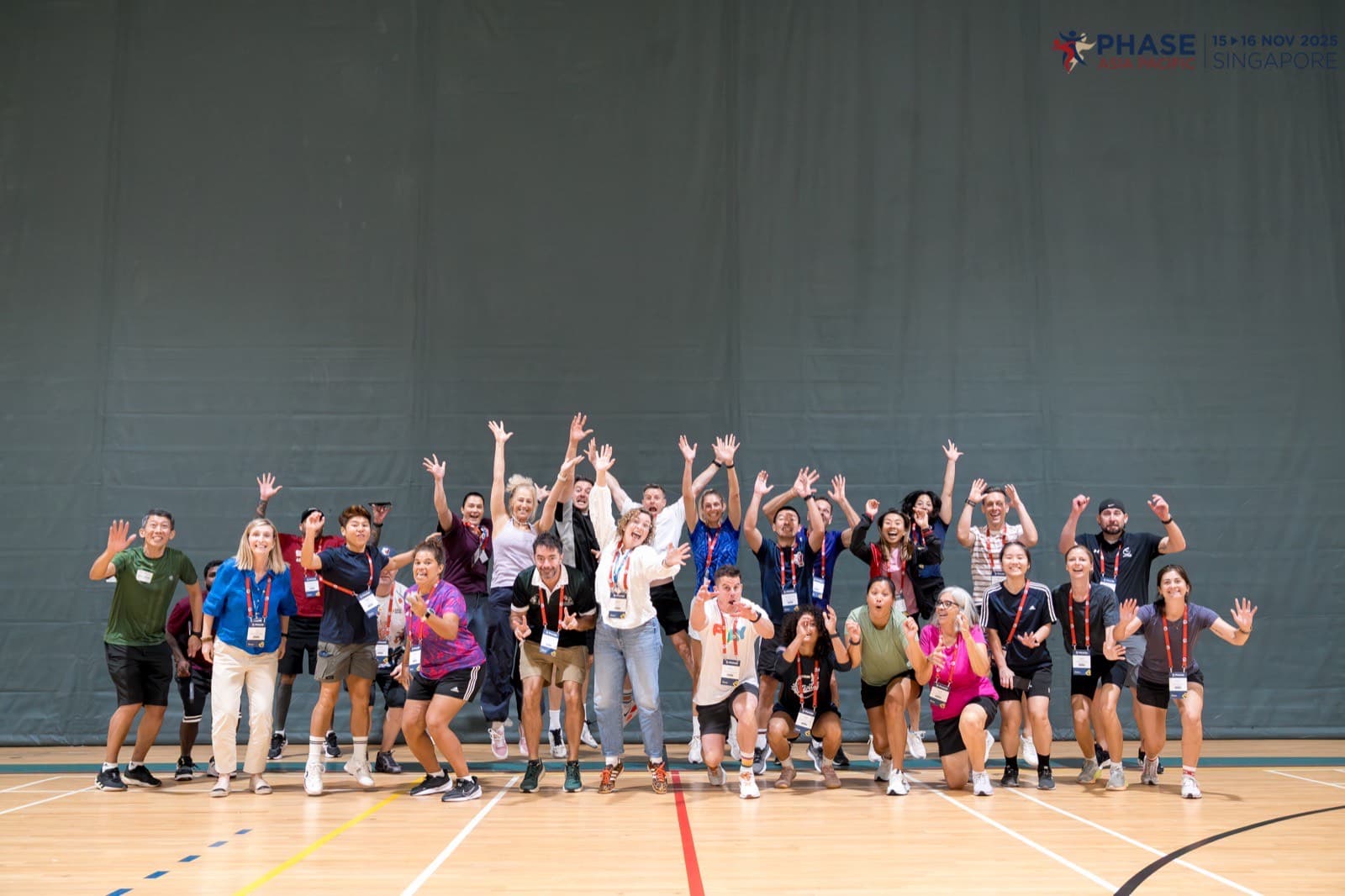
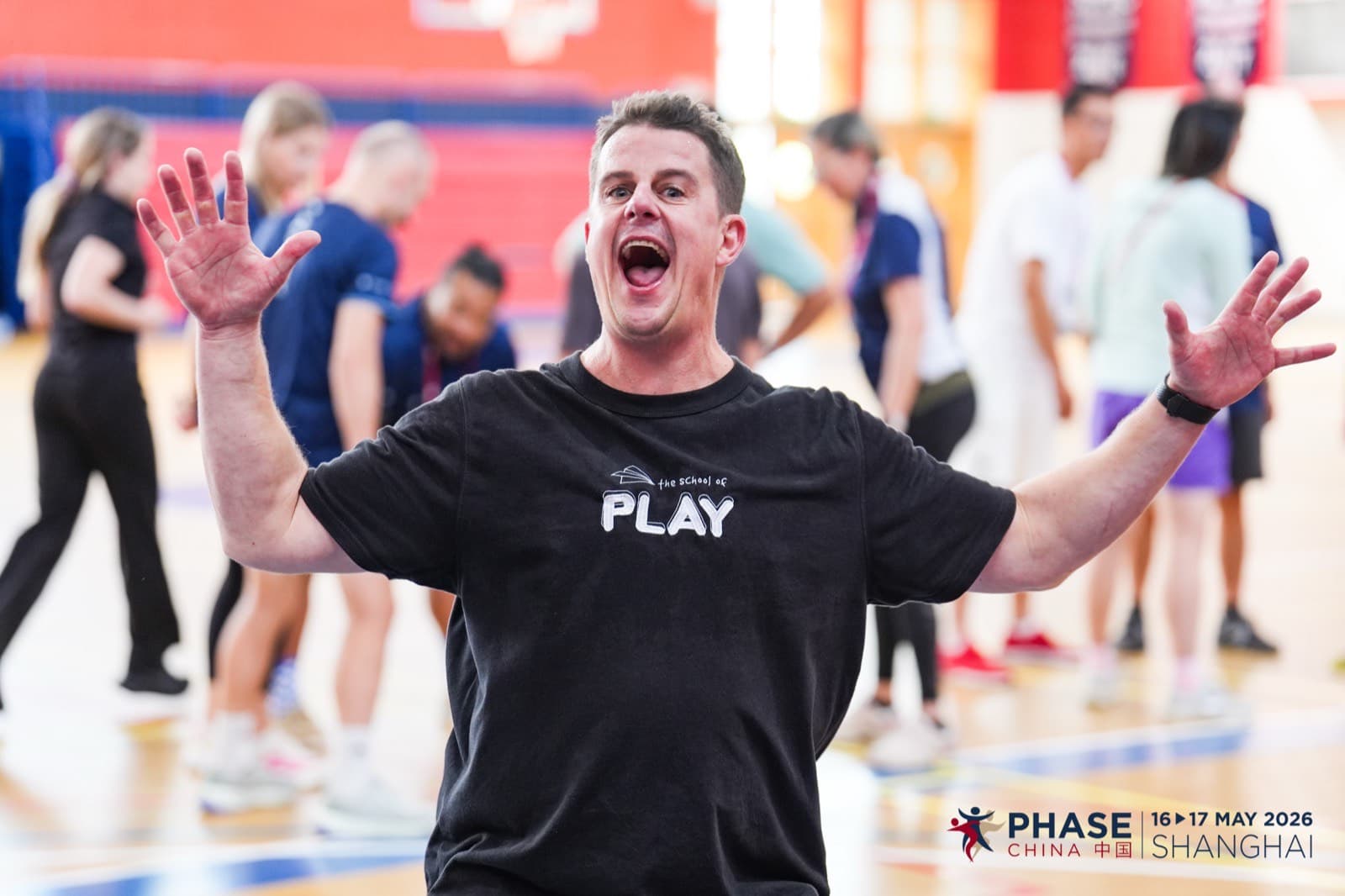
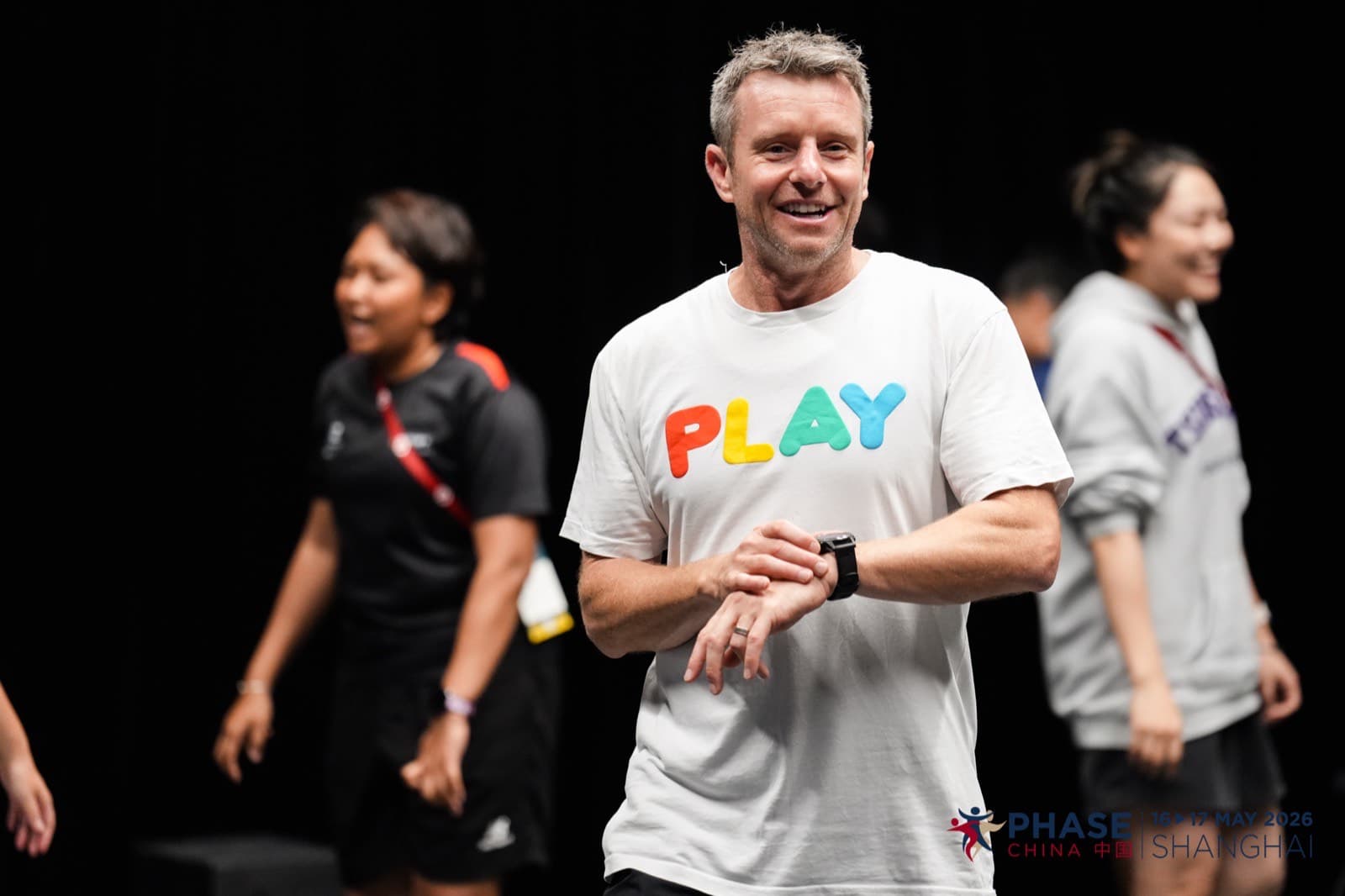
From the kindy mat to the conference hall.
The School of Play curriculum runs in classrooms, conferences and campuses across Australia, Asia and beyond.
Five minutes a day. One framework. PEGG.
Here's what a typical week looks like in a Grade 3–4 classroom: Play, Exercise, Gratitude, Giving, Reflect. Adapted up and down for every age group.
Cooperative game: Mirror Mirror. Builds focus, attention, social attunement.
Movement break: Lava Floor. Quick energy reset between literacy and numeracy.
Three-circle journal: who, what, why. Builds emotional vocabulary.
Random act challenge: pair up, give a class member a thoughtful compliment.
Weekly circle: what went well, what we noticed, what we want to try next week.
Built for every age. From the kindy mat to year 9 lockers.
25–40 weeks of activities per age group, mapped to 16 global curriculum standards, SEL (CASEL) and Respectful Relationships.
Built around sensory exploration and joyful movement. Every session introduces the four PEGG practices through age-appropriate games, songs and circle rituals. SEL focus: emotional vocabulary, impulse control and making friends through play. Respectful Relationships content covers body safety, consent and kindness, woven naturally into every game.
Storytelling, cooperative games and imaginative movement form the backbone of this level. SEL focus: identifying emotions, building empathy and developing friendship skills through structured play scenarios. Respectful Relationships content covers recognising feelings, understanding fairness and practising inclusive language.
Cooperative challenges, healthy competition and mindfulness rituals. Students begin leading games and reflecting on group dynamics. SEL focus: self-management, responsible decision-making and managing conflict constructively. Respectful Relationships covers respectful communication, gender equality and navigating peer pressure through play.
Leadership, peer mentoring and transition preparation. Students design and lead activities for younger year levels. SEL focus: self-awareness, social awareness and preparing for secondary school. Respectful Relationships covers healthy relationships, consent, digital wellbeing and supporting peers, content that bridges primary and secondary realities.
Identity, resilience and mental health literacy. Activities address the social pressures of adolescence through safe, play-based exploration. SEL focus: emotional regulation, belonging and building authentic confidence. Respectful Relationships covers healthy vs. unhealthy dynamics, online boundaries, bystander skills and help-seeking behaviour.
Sensory-aware, inclusive and adaptive. Every activity has three modification levels so educators can meet students exactly where they are. SEL focus: communication, co-regulation, connection and joy for students with diverse learning needs. Respectful Relationships content is visual-led and simplified, designed in partnership with special education specialists.
Everything your team needs to teach play with confidence.
Every curriculum runs between 25 and 40 weeks. Each one integrates Respectful Relationships components designed to build positive connections, emotional literacy, empathy and social skills.
- 25–40 weeks of activities with detailed learning intentions
- Success criteria for every activity
- Video tutorials for every activity
- Family, Student and Facilitator guides
- Respectful Relationships integration
- Online platform access for teachers and families
Mapped to 16 frameworks including Respectful Relationships.
Wherever you teach, the curriculum fits.
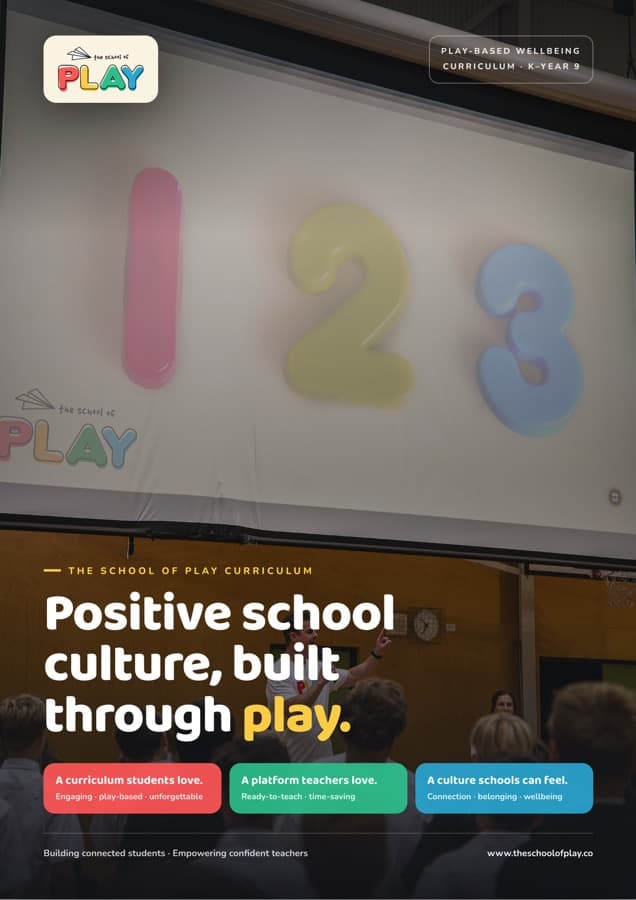
Take the curriculum brochure to your leadership team.
Everything a principal, wellbeing lead or curriculum coordinator needs to understand what the Play-Based Wellbeing Curriculum is, how it works and why it lands, in one shareable document. Print it, forward it, bring it to the meeting.
PDF · Free · No sign-up required
Annual licences, every grade included.
All prices AUD · per school · per year
Up to 80 students
- Full curriculum K–9
- Family + student access
- AITSL-aligned PD hours
- Better Us Schools dashboard
80–200 students
- Full curriculum K–9
- Family + student access
- AITSL-aligned PD hours
- Better Us Schools dashboard
200–500 students
- Full curriculum K–9
- Family + student access
- AITSL-aligned PD hours
- Better Us Schools dashboard
500+ students
- Full curriculum K–9
- Family + student access
- AITSL-aligned PD hours
- Better Us Schools dashboard
Common questions from teachers and leaders.
Can't find what you're looking for? Drop us a line and we'll get back to you within one business day.
Real answers, real humans.
No bots, no run-arounds.
01How do I align this with my existing curriculum?
Every School of Play activity maps to learning intentions across literacy, numeracy, PE, health and SEL. We can show you the exact alignment for your jurisdiction and year level.
02Can families access the activities at home?
Yes. Every annual licence includes family access, so the play continues at home, and parents get visibility into what their child is doing in class.
03What's the time commitment per day?
Five minutes is the minimum daily ritual. Most teachers find a 15-minute slot once or twice a week for the longer cooperative activities. The whole curriculum fits inside what you're already teaching.
04Is the Respectful Relationships content age-appropriate?
Yes. It's woven into every age group from Kindergarten to Year 9, scaled appropriately for each developmental stage.
Take the next step
Tell our lesson designer about your class and get a complete play lesson, free, in seconds. Then book a demo to see the full curriculum.